


The Five Pillars of Holistic Wellness

1. Fitness & Exercise
Fitness and exercise refer to structured physical activity designed to improve or maintain physical capability, bodily endurance, and overall health. While movement in general burns calories, targeted exercise challenges the cardiovascular, muscular, and skeletal systems to adapt and grow stronger over time.
Points to Understand
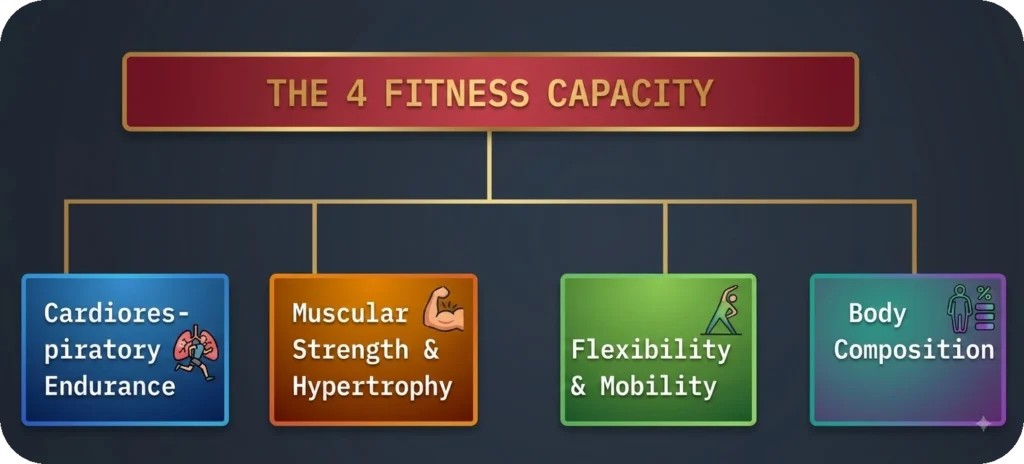
- Pillars of Physical Fitness: Balanced fitness includes four main components:
- Cardiovascular Endurance: The ability of your heart and lungs to supply oxygen during sustained activity (e.g., running, cycling).
- Muscular Strength & Endurance: The force muscles can exert and their ability to sustain contractions over time (e.g., weightlifting, push-ups).
- Flexibility: The range of motion around joints, which reduces injury risk (e.g., stretching, yoga).
- Body Composition: The relative ratio of muscle, bone, water, and fat tissue in the body.
- Progressive Overload Principle: To improve fitness, workouts must gradually increase in intensity, weight, or duration. Without progressive challenge, physical adaptation stalls.
- Metabolic & Disease Benefits: Regular exercise lowers resting blood pressure, increases insulin sensitivity, reduces systemic inflammation, and stimulates neurogenesis (brain cell growth).
Step-by-Step Implementation Guide
- Assess Baseline & Set Clear Goals: Begin by evaluating your current physical limits. Consult a healthcare professional if you have underlying conditions. Define SMART goals (e.g., “Walk 30 minutes 5 days a week” rather than “Get fit”).
- Design a Balanced Weekly Schedule: Aim for 150 minutes of moderate aerobic activity or 75 minutes of vigorous activity weekly, combined with 2 or more days of full-body resistance training. Leave at least 1-2 rest days for muscle recovery.
- Master Form and Warm-Up Protocols: Before every workout, spend 5–10 minutes performing dynamic stretches (e.g., arm circles, leg swings). Learn correct biomechanics for foundational movements (squat, hinge, push, pull, carry) before adding heavy resistance.
- Track Progress and Apply Progressive Overload: Keep a workout log. Every 1–2 weeks, slightly increase repetitions, duration, or resistance by 5–10% to continuously challenge your muscular and nervous systems.
- Prioritize Recovery and Deloading: Ensure 7–9 hours of quality sleep nightly and maintain adequate protein intake. Incorporate a light “deload” week with reduced volume every 6–8 weeks to prevent overuse injuries and burnout.
2. Health & Wellness
Health & Wellness encompasses a multidimensional, active process of becoming aware of and making choices toward a fulfilling life. While “health” often refers to the objective physical or mental state of being free from illness, “wellness” is the deliberate practice of lifestyle habits that cultivate long-term vitality across physical, emotional, mental, and social dimensions.
Points to Understand
- The World Health Organization (WHO) Definition: Health is defined not merely as the absence of disease or infirmity, but as a state of complete physical, mental, and social well-being.
- Dimensions of Wellness:
- Physical: Caring for your body through sleep, movement, and medical care.
- Emotional: Recognizing, understanding, and managing feelings constructively.
- Mental/Intellectual: Engaging in creative and mentally stimulating activities.
- Social: Building supportive, meaningful connections with friends and community.
- Preventative vs. Reactive Health: Wellness focuses heavily on primary prevention—building physiological and mental resilience before chronic conditions manifest.
Step-by-Step Implementation Guide
- Establish a Preventive Care Baseline: Schedule annual wellness exams, blood panels (lipid profiles, metabolic panels, vitamin levels), dental check-ups, and screenings appropriate for your age and demographic to establish your health baseline.
- Optimize Sleep Hygiene and Circadian Rhythms: Maintain consistent sleep and wake times, even on weekends. Get bright sunlight exposure within 30 minutes of waking to set your circadian rhythm, and stop blue light exposure 1-2 hours before bed.
- Develop Stress Management Mechanisms: Identify primary daily stressors. Integrate daily autonomic nervous system down-regulation practices such as breathwork, spending time in nature, or scheduling unscheduled leisure time.
- Cultivate High-Quality Social Connections: Prioritize active face-to-face time with friends, family, or community groups. Strong social ties correlate with enhanced immune function and reduced mortality risk.
- Conduct Periodic Life Audits: Review your physical energy, stress levels, work-life boundaries, and relationships quarterly. Adjust daily habits where you identify chronic friction or energy drain.
3. Healthy Lifestyle
A Healthy Lifestyle represents the day-to-day integration of conscious decisions regarding diet, physical activity, environmental exposure, sleep, and mental habits. Unlike short-term “fixes” or strict diets, a healthy lifestyle focuses on behavioral sustainability, habit formation, and long-term consistency over short-term perfection.
Points to Understand
- Habit Stacking & Behavioral Science: Long-term lifestyle shifts depend on automatic habits rather than willpower. Habit stacking—attaching a new habit to an established routine—significantly increases adoption rates.
- The 80/20 Rule (Pareto Principle): Achieving 80% consistency with nutrient-dense foods, movement, and sleep yields better lifelong results than attempting 100% adherence to an unsustainable regime.
- Environmental Design: Your daily surroundings heavily dictate behavior. Removing friction for healthy habits (e.g., laying out workout gear) and adding friction for unhealthy habits (e.g., keeping processed snacks out of the pantry) drives success.
Step-by-Step Implementation Guide
- Perform an Environment and Routine Audit: Examine your daily environment. Remove visible triggers for unwanted behaviors (junk food, screens in the bedroom) and place visual cues for positive behaviors (water bottle on desk, walking shoes by the door).
- Focus on Micro-Habits First: Start small to overcome inertia. Commit to 5 minutes of exercise, eating one extra serving of vegetables daily, or reading 2 pages of a book before bed rather than dramatic, overnight overhauls.
- Automate Hydration and Daily Movement: Drink 500ml of water immediately upon waking. Aim for non-exercise activity thermogenesis (NEAT)—take stairs, use a standing desk, or take a 10-minute walk after each meal.
- Establish Boundaries Around Work and Technology: Define clear “work stop” times. Set digital boundaries, such as no work emails after 7 PM and keeping smartphones away from the dinner table and bed.
- Track Consistency Rather Than Perfection: Use a simple habit tracker. Apply the “never miss twice” rule: if you miss a workout or eat a poor meal, focus on resuming your standard routine on the very next opportunity.
4. Meditation
Meditation is a mental training practice that involves focusing attention, cultivating awareness, and redirecting thought patterns. Rather than attempting to “stop” thoughts or force quietness, meditation trains the mind to observe mental events, emotions, and physical sensations non-judgmentally, strengthening emotional regulation and cognitive control.
Points to Understand
- Neuroplasticity & Brain Alteration: Regular meditation increases cortical thickness in regions associated with attention and sensory processing (such as the prefrontal cortex) while reducing amygdala reactivity, lowering stress responses.
- Core Modalities:
- Mindfulness (Open Monitoring): Observing thoughts, feelings, and sensations as they pass without clinging to or judging them.
- Concentrative (Focused Attention): Directing attention strictly onto a single point, such as the breath, a visual object, or a mantra.
- Compassion/Loving-Kindness (Metta): Intentionally cultivating positive, warm feelings toward oneself and others.
- Default Mode Network (DMN): Meditation down-regulates activity in the brain’s DMN, which is active during mind-wandering, rumination, and self-referential worry.
Step-by-Step Implementation Guide
- Select a Dedicated Time and Quiet Space: Choose a period—ideally early morning—when interruptions are unlikely. Sit comfortably in a chair or on a cushion with your spine straight, shoulders relaxed, and hands rested on your lap.
- Set a Short, Achievable Timer: Begin with a 3 to 5-minute session. Using a soft chime or meditation app timer prevents you from opening your eyes to check the time during the session.
- Anchor Attention on the Breath: Close your eyes or hold a soft gaze downward. Direct your attention to the physical sensation of breathing—the expansion of the abdomen or the air entering and leaving the nostrils.
- Observe Mind-Wandering and Gently Return: When your mind inevitably drifts to past events or future to-do lists, do not criticize yourself. Simply acknowledge the thought (“thinking”) and gently return your focus to your breath.
- Progressively Increase Duration and Techniques: Add 1–2 minutes to your daily practice each week until you comfortably reach 15–20 minutes. Experiment with body scans, open monitoring, or guided meditations to find what suits your needs best.
5. Nutrition Management
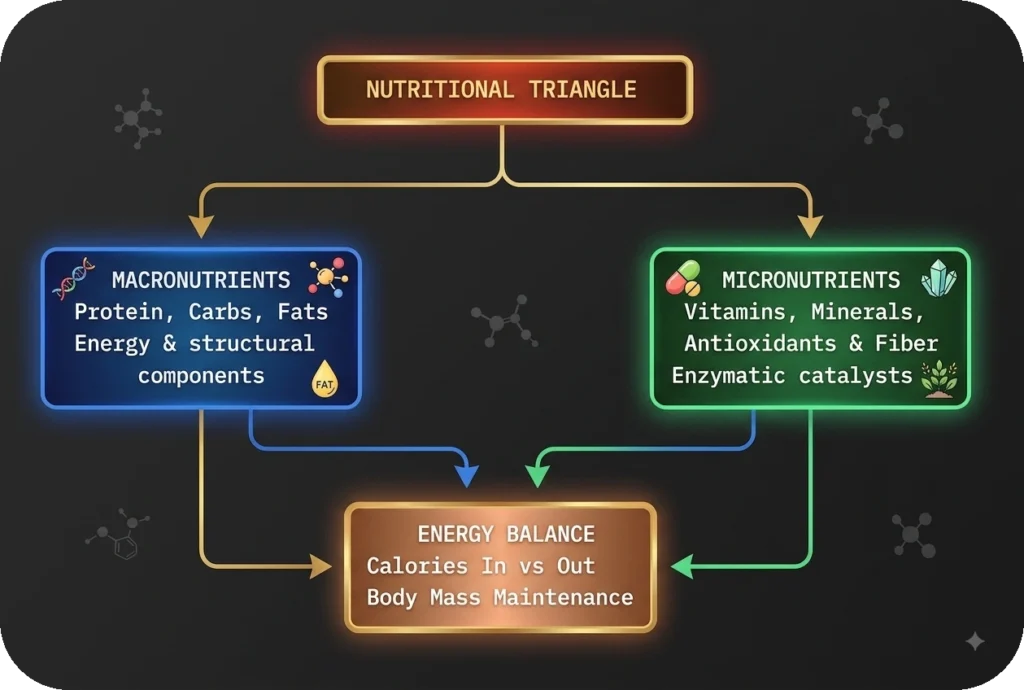
Nutrition Management involves the conscious selection, preparation, and consumption of macronutrients and micronutrients to meet fuel requirements, optimize biological function, maintain healthy body composition, and prevent chronic diseases. It moves beyond restrictive dieting toward understanding individual metabolic needs.
Points to Understand
- Macronutrient Balance:
- Proteins (4 kcal/g): Essential for muscle repair, enzyme production, immune health, and satiety.
- Carbohydrates (4 kcal/g): Primary energy source for central nervous system and high-intensity muscular work.
- Fats (9 kcal/g): Vital for hormone synthesis, cell membrane integrity, and fat-soluble vitamin absorption (A, D, E, K).
- Micronutrients and Hydration: Vitamins, minerals, and trace elements act as catalysts in biochemical reactions. Adequate fluid intake is essential for joint lubrication, nutrient transport, and temperature regulation.
- Energy Balance Equation: Total Daily Energy Expenditure (TDEE) governs body mass. Consuming more calories than expended leads to mass gain; consuming fewer leads to loss. However, food quality dictates health, body composition, and hormonal signaling.
Step-by-Step Implementation Guide
- Calculate Basal Needs and Set Primary Goals: Use a validated equation (e.g., Mifflin-St Jeor) to estimate your TDEE based on age, gender, height, and activity level. Adjust intake based on whether your goal is fat loss, maintenance, or muscle gain.
- Prioritize Whole Foods and Protein Baseline: Build meals around whole, minimally processed foods (lean proteins, vegetables, whole grains, nuts, and seeds). Set protein intake at ~1.6–2.2 grams per kilogram of target body weight for tissue maintenance and satiety.
- Fill Plate with Fiber and Micronutrients: Aim for at least 25–35 grams of dietary fiber daily. Ensure half of each major meal consists of colorful vegetables and fruits to supply vitamins, antioxidants, and minerals.
- Implement Smart Meal Preparation Systems: Plan meals weekly. Batch-cook protein sources, grains, and roasted vegetables on designated prep days so healthy options are always readily available in the refrigerator.
- Monitor Internal Satiety Cues and Adjust: Practice mindful eating: eat slowly, chew thoroughly, and stop when ~80% full. Track energy, digestion, sleep, and performance for 3-4 weeks, then adjust carb or fat ratios based on how your body responds.
The collective term or umbrella name for these five concepts depends on the context in which they are being used:
1. The Core Pillars of Holistic Wellness (Most Common)
In health and medical frameworks, these five areas are collectively referred to as the Five Pillars of Holistic Wellness (or Holistic Health). They represent an integrated approach where physical, mental, emotional, and biological aspects of human health interact with one another.
2. Integrative Health Pillars
In clinical, lifestyle medicine, and corporate wellness settings, they are often called Integrative Health Domains or Lifestyle Medicine Pillars. They form the foundation of preventive medicine—practices that prevent chronic illness before it starts.
3. The 5 Dimensions of Personal Well-Being
In personal development and health coaching, they are summarized as the Dimensions of Well-Being, specifically covering:
- Physical: Fitness & Exercise + Nutrition Management
- Mental & Emotional: Meditation
- Lifestyle & Prevention: Health & Wellness + Healthy Lifestyle
Quick Summary of How They Interlock
| Pillar | Primary Focus | Core Benefit |
| Fitness & Exercise | Physical movement & strength | Cardiovascular & muscular resilience |
| Nutrition Management | Fuel & biological building blocks | Metabolic function & recovery |
| Meditation | Mental training & mindfulness | Stress regulation & cognitive clarity |
| Healthy Lifestyle | Daily habits & environment | Sustainability & long-term consistency |
| Health & Wellness | Overall vitality & preventative care | Disease prevention & overall life quality |


Here is the complete, comprehensive blog post fully formatted with Markdown headers, tables, diagrams, and bullet points. You can easily select, copy, and paste everything below directly into your blog editor:
The Ultimate Guide to the 5 Pillars of Holistic Vitality
Building long-term health is rarely about finding a single “magic bullet.” True longevity, energy, and resilience stem from a dynamic, interconnected system. When you align your physical movement, restorative mental practices, daily habits, preventative care, and nutritional intake, you build an environment where your body and mind can thrive.
Here is an in-depth, evidence-based exploration of the five core pillars of health, complete with step-by-step implementation strategies, scientific context, and common pitfalls to avoid.
1. Fitness & Exercise: Building Physical Capacity & Resilience
Fitness and exercise represent structured, intent-driven physical stress placed upon the body. While daily non-exercise movement (like walking or doing chores) burns calories, structured exercise forces adaptive responses in your cardiovascular, neuromuscular, and skeletal systems.
Deeper Science & Core Principles
- Cardiorespiratory Adaptation: Aerobic exercise increases stroke volume (the amount of blood the heart pumps per beat), enhances mitochondrial density within cells, and promotes angiogenesis (the growth of new blood vessels).
- Sarcopenia Prevention: Human muscle mass decreases by roughly 3% to 8% per decade after age 30. Resistance training stimulates muscle protein synthesis (MPS) through mechanical tension, halting age-related muscle loss and preserving metabolic rate.
- Bone Mineral Density: Weight-bearing activities exert mechanical strain on bones, stimulating osteoblasts (bone-forming cells) to deposit calcium and protein matrices, preventing osteoporosis.
Key Metrics to Track
| Metric | Target / Benchmark | Primary Benefit |
| Zone 2 Cardio | 150–180 mins / week | Mitochondrial health & aerobic base |
| Strength Training | 2–4 sessions / week | Joint stability, glucose disposal, muscle mass |
| Daily Step Count | 7,000–10,000 steps | Non-Exercise Activity Thermogenesis (NEAT) |
| VO2 Max | Age-graded top percentiles | Strongest predictor of all-cause mortality |
Actionable Implementation Strategy
- Establish a Baseline Fitness Evaluation: Test your current mobility, push-up capacity, plank duration, and a timed 1-mile walk or 1.5-mile run to establish benchmarks.
- Structure a Polarized Training Week: Allocate 80% of your cardio volume to low-intensity Zone 2 (conversational pace) and 20% to high-intensity intervals (HIIT). Pair this with 3 full-body resistance training sessions focusing on compound movements (squats, deadlifts, overhead presses, rows).
- Execute Dynamic Warm-ups: Spend 8–10 minutes performing multi-planar movements (world’s greatest stretch, cat-cows, bodyweight lunges) to increase core tissue temperature and lubricating synovial fluid in joints.
- Apply Micro-Progressive Overload: Log workouts meticulously. Increase load by 2.5–5% or add 1–2 repetitions once you hit the top of a target rep range.
- Periodize and Deload: Every 6th to 8th week, reduce training volume and intensity by 40–50% to allow full central nervous system (CNS) and connective tissue recovery.
Common Pitfall: Skipping progressive overload in favor of random, high-intensity workouts that lead to fatigue without sustained physical adaptation.
2. Health & Wellness: Preventative Systems & Systems Integration
While fitness focuses on output and capacity, Health & Wellness encompasses the broader physiological and emotional umbrella. It represents your body’s homeostasis—the balance of hormone regulation, immune function, nervous system tone, and organ health.

Deeper Science & Core Principles
- Circadian Entrainment: Your central clock in the suprachiasmatic nucleus (SCN) regulates cortisol, melatonin, core body temperature, and organ function. Early light exposure triggers serotonin production, setting the timer for nocturnal melatonin release.
- Autonomic Tone: The autonomic nervous system alternates between sympathetic (“fight or flight”) and parasympathetic (“rest and digest”) states. Chronic sympathetic dominance elevates baseline cortisol, impairing immune response and exacerbating systemic inflammation.
- Preventative Biomarker Management: Disease states like metabolic syndrome, cardiovascular disease, and fatty liver often progress silently for decades. Monitoring biomarkers allows proactive clinical intervention before irreversible damage occurs.
Essential Biomarkers to Monitor Annually
- Metabolic: Fasting Glucose, HbA1c, Fasting Insulin, HOMA-IR.
- Lipid/Cardiovascular: ApoB, High-Sensitivity C-Reactive Protein (hs-CRP), Triglyceride-to-HDL ratio.
- Hormonal/Nutritional: Vitamin D3 (25-OH), High-sensitivity Thyroid Panel (TSH, Free T3, Free T4), Ferritin.
Actionable Implementation Strategy
- Schedule Comprehensive Diagnostics: Partner with a physician to run full-spectrum blood panels, blood pressure checks, and age-appropriate physical assessments.
- Anchor Circadian Light Cycles: Get 10–20 minutes of natural outdoor sunlight within 45 minutes of waking. Avoid bright overhead lighting and blue spectrum screens 90 minutes before sleep.
- Optimize Sleep Architecture: Keep the bedroom pitch dark, quiet, and cool (65°F / 18°C). Maintain consistent sleep-wake times within a 30-minute window every day of the week.
- Implement Daily Parasympathetic Triggers: Use active down-regulation techniques—such as physiological sighs (two quick inhales through the nose, one long exhale through the mouth) or warm baths—to transition out of work mode.
- Conduct Quarterly Life Audits: Track key wellness markers: resting heart rate (RHR), heart rate variability (HRV), subjective stress levels, and fulfillment across work, social, and personal domains.
Common Pitfall: Treating symptoms reactively with medication or quick fixes rather than addressing root-cause lifestyle imbalances like poor sleep architecture or elevated baseline stress.
3. Healthy Lifestyle: Behavioral Engineering & Environment Design
A healthy lifestyle converts theoretical health knowledge into practical, daily behavior. It is the tactical blueprint for how you organize your environment, form habits, manage digital input, and maintain personal boundaries.

Deeper Science & Core Principles
- The Habit Loop: Habits are subconscious neural pathways formed through a cue, craving, response, and reward cycle. Reducing friction for positive habits lowers the activation energy required by the prefrontal cortex.
- Friction & Choice Architecture: Willpower is a finite cognitive resource subject to decision fatigue. Changing your physical environment—removing temptations and making positive choices default—bypasses reliance on motivation.
- Non-Exercise Activity Thermogenesis (NEAT): NEAT encompasses all energy expended through non-workout movement (standing, walking, pacing). It accounts for up to 15–30% of total daily energy expenditure, vastly outstripping a single 45-minute workout.
Friction Reduction Matrix
| Target Behavior | High-Friction Setup (Fails) | Low-Friction Setup (Succeeds) |
| Morning Workout | Gym clothes stored away, alarm across the room | Clothes laid out, shoes by the bed |
| Healthy Snacking | Whole unwashed fruit hidden in crisper drawer | Chopped vegetables visible at eye-level |
| Reduced Screen Time | Phone on nightstand beside bed | Phone charging in another room overnight |
Actionable Implementation Strategy
- Audit Environment & Identify Friction Points: Document your daily routine for 3 days. Identify where unwanted habits occur (e.g., late-night snacking, social media scrolling) and modify the physical space to add friction.
- Utilize Habit Stacking: Anchor new habits onto established triggers. Use the formula: “After I [Current Habit], I will [New Healthy Habit].” (e.g., “After I pour my morning coffee, I will drink 500ml of water.”)
- Set Clear Digital Boundaries: Create “tech-free zones” (the dinner table and bedroom) and “tech-free times” (the first and last 60 minutes of the day). Turn off non-essential smartphone notifications.
- Engineer NEAT into Your Schedule: Integrate 5–10 minute movement bursts into your workday. Use a standing desk, conduct walking meetings, or take a brisk walk immediately after eating.
- Enforce the “Two-Day Rule”: Never allow a missed habit (workout, clean meal, early bedtime) to happen two days in a row. Missing once is a slip; missing twice starts a new negative habit loop.
Common Pitfall: Attempting complete lifestyle overhauls simultaneously, which exhausts willpower and causes a total relapse into old habits within weeks.
4. Meditation: Cognitive Control & Nervous System Regulation
Meditation is a structured mental exercise that strengthens emotional regulation, focus, and metacognition (the ability to observe your own thoughts). It serves as a gym for your mind, shifting brain activity from reactive emotional patterns to intentional cognitive processing.

Deeper Science & Core Principles
- Structural Neuroplasticity: Magnetic Resonance Imaging (MRI) studies demonstrate that consistent meditation increases grey matter density in the prefrontal cortex (executive function) and hippocampus (memory), while reducing volume in the amygdala (fear and threat processing).
- Default Mode Network (DMN) Deactivation: The DMN is active when the brain is at rest, unengaged, or ruminating on the past/future. Meditation down-regulates DMN activity, lowering anxiety and mental chatter.
- Vagal Nerve Stimulation: Deep, controlled diaphragmatic breathing stimulates the vagus nerve, triggering acetylcholine release, lowering heart rate, and shifting the body into a parasympathetic state.
Primary Meditation Styles Compared
| Style | Primary Focus | Ideal For |
| Focused Attention (FA) | Single anchor (breath, mantra, sound) | Enhancing focus, concentration, and clarity |
| Open Monitoring (OM) | Non-judgmental observation of internal thoughts | Emotional resilience, stress reduction |
| Loving-Kindness (Metta) | Directed intent of goodwill to self and others | Reducing self-criticism, empathy building |
Actionable Implementation Strategy
- Establish an Unshakeable Micro-Commitment: Start with just 3 to 5 minutes daily. Consistency is far more valuable for neural pathway alteration than occasional 45-minute sessions.
- Set the Physical Posture: Sit comfortably upright with an elongated spine, relaxed shoulders, and feet flat on the floor or legs crossed. Keep your hands supported on your lap to avoid muscle tension.
- Anchor onto the Breath Cycle: Focus on the physical sensations of breathing—the cool air at the nostril entrance or the rising and falling of the diaphragm.
- Execute the Re-Focus Loop: When your mind drifts (which is natural and expected), notice the drift non-judgmentally, mentally label it (“thinking” or “wandering”), and return focus to the breath anchor.
- Scale Practices Methodically: Add 1–2 minutes per week to your practice as your focus stabilizes, targeting a daily session length of 12–20 minutes.
Common Pitfall: Frustration from expecting a “blank mind.” Meditation is not the absence of thought, but the practice of noticing thoughts without reacting to them.
5. Nutrition Management: Fueling, Repair & Metabolic Health
Nutrition Management moves beyond short-term restriction to view food as information, fuel, and biological building blocks. It involves balancing caloric density, macronutrient ratios, micronutrient sufficiency, and food quality to support daily energy and long-term health.
Deeper Science & Core Principles
- Protein Leverage Hypothesis: The human body prioritizes protein intake above energy intake. Consuming inadequate protein triggers overeating of fats and carbohydrates as the body seeks to meet its essential amino acid requirements.
- Glycemic Response & Insulin Dynamics: Refined carbohydrates cause rapid spikes in blood glucose, demanding high insulin secretion. Over time, high insulin levels can induce tissue insulin resistance, leading to metabolic dysfunction.
- Gut Microbiome Diversity: Dietary fiber acts as a prebiotic, feeding gut microbiota. Bacteria ferment fiber into Short-Chain Fatty Acids (SCFAs) like butyrate, which protect the gut barrier, regulate immune response, and decrease inflammation.
Macronutrient Optimization Framework
| Nutrient | Recommended Base Range | Key Sources | Primary Physiological Role |
| Protein | 1.6–2.2 g / kg of body weight | Lean meats, fish, eggs, tofu, legumes | Tissue repair, enzyme synthesis, muscle preservation |
| Carbohydrates | 2.0–5.0 g / kg (activity dependent) | Oats, sweet potatoes, berries, quinoa | CNS fuel, glycogen replenishment |
| Fats | 0.8–1.2 g / kg of body weight | Extra virgin olive oil, avocados, nuts, salmon | Hormone production, cell membrane health |
| Fiber | 30–45 grams / day | Cruciferous vegetables, beans, seeds | Microbiome nourishment, blood sugar regulation |
Actionable Implementation Strategy
- Calculate Baseline Energy Needs: Estimate your Total Daily Energy Expenditure (TDEE) using an online calculator based on age, sex, weight, height, and activity level.
- Anchor Your Protein Intake: Distribute your total daily protein across 3–4 discrete meals (30–40g per meal) to optimize muscle protein synthesis throughout the day.
- Emphasize Whole Foods: Ensure 80–90% of your daily calories come from single-ingredient whole foods. Limit ultra-processed foods high in hyper-palatable fat, refined sugar, and sodium combinations.
- Practice Smart Hydration: Drink 30–40 ml of water per kilogram of body weight daily. Add electrolytes (sodium, potassium, magnesium) during heavy training days or warm weather.
- Utilize Pre-Meal Planning: Plan your meals 24 hours in advance or batch-prep staples on weekends. Removing impulse decisions at mealtime stabilizes nutritional consistency.
Common Pitfall: Over-indexing on extreme calorie restriction or trendy elimination diets while neglecting micronutrient variety, protein minimums, and total dietary fiber.
Synthesis: How the 5 Pillars Interlock
None of these pillars exists in isolation. They form an integrated network where improvements in one area amplify progress in the others:

- Fitness requires Nutrition to fuel workouts and repair muscle tissue.
- Meditation reduces stress-induced cortisol, improving Sleep Architecture (Wellness) and reducing cravings for processed foods (Nutrition).
- Healthy Lifestyle habit systems provide the structural framework required to execute workout plans (Fitness) and cook real food (Nutrition) consistently.
By addressing all five pillars systematically rather than focusing on just one, you establish a balanced, sustainable foundation for lifelong health and high physical performance.